
Sciatica: What That Shooting Leg Pain Really Means

If you’ve ever felt pain shooting from your lower back or buttock down your leg, you’ve likely experienced sciatica. Despite its name, sciatica isn’t a disease it’s a symptom that something is irritating or compressing the large sciatic nerve.
The key to relief is understanding what’s causing that nerve irritation and treating it directly not just masking the pain.
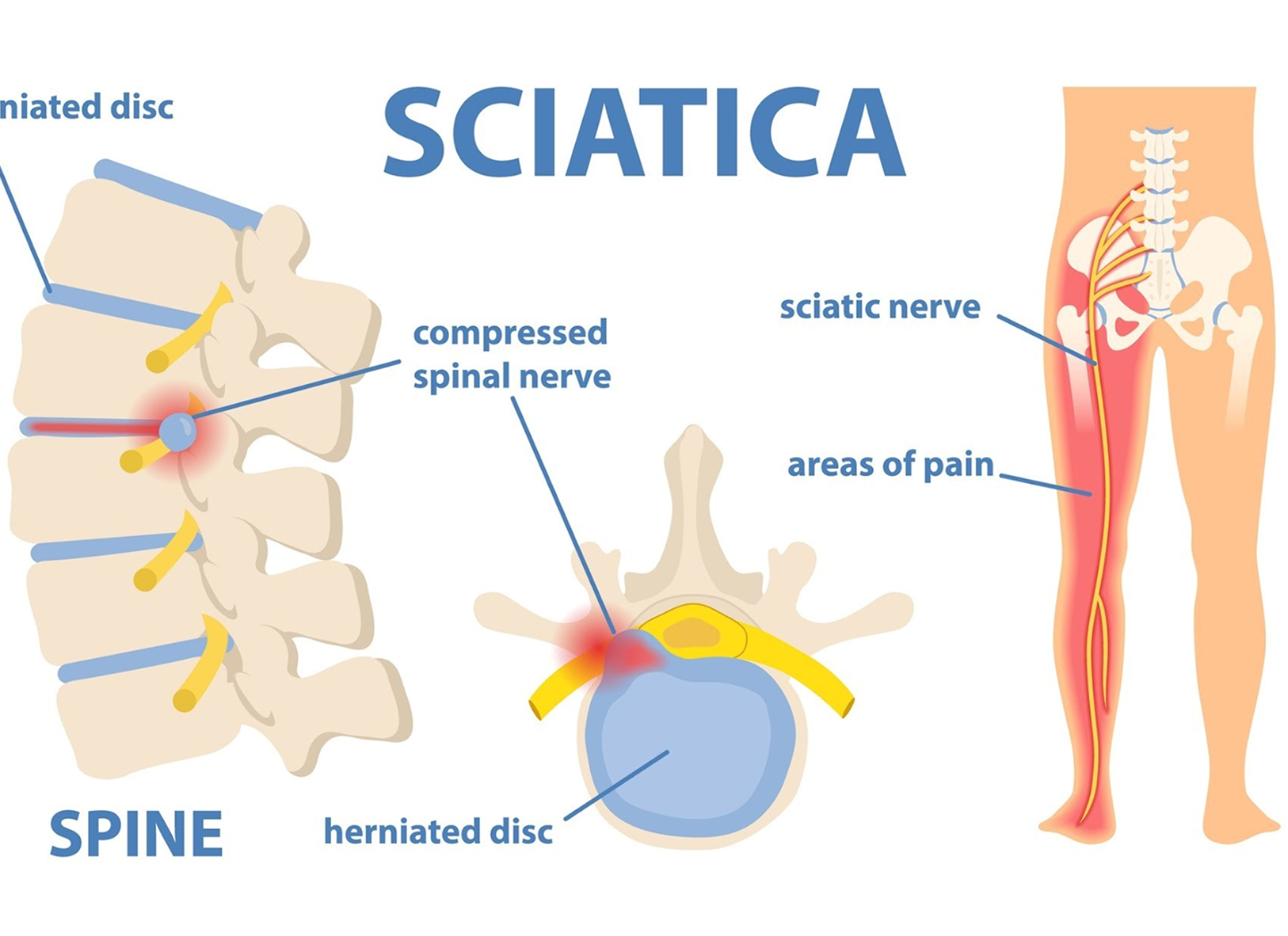
What Is the Sciatic Nerve?

The sciatic nerve is the body’s longest nerve. It begins in the lower spine, travels through the buttock, and runs down each leg. When any part of this nerve becomes compressed or inflamed, it can cause burning, tingling, or sharp pain that radiates down the leg.
available on spotify & apple podcast


Common Causes of Sciatica

Sciatica can result from several underlying issues. Identifying the correct cause helps target treatment precisely.
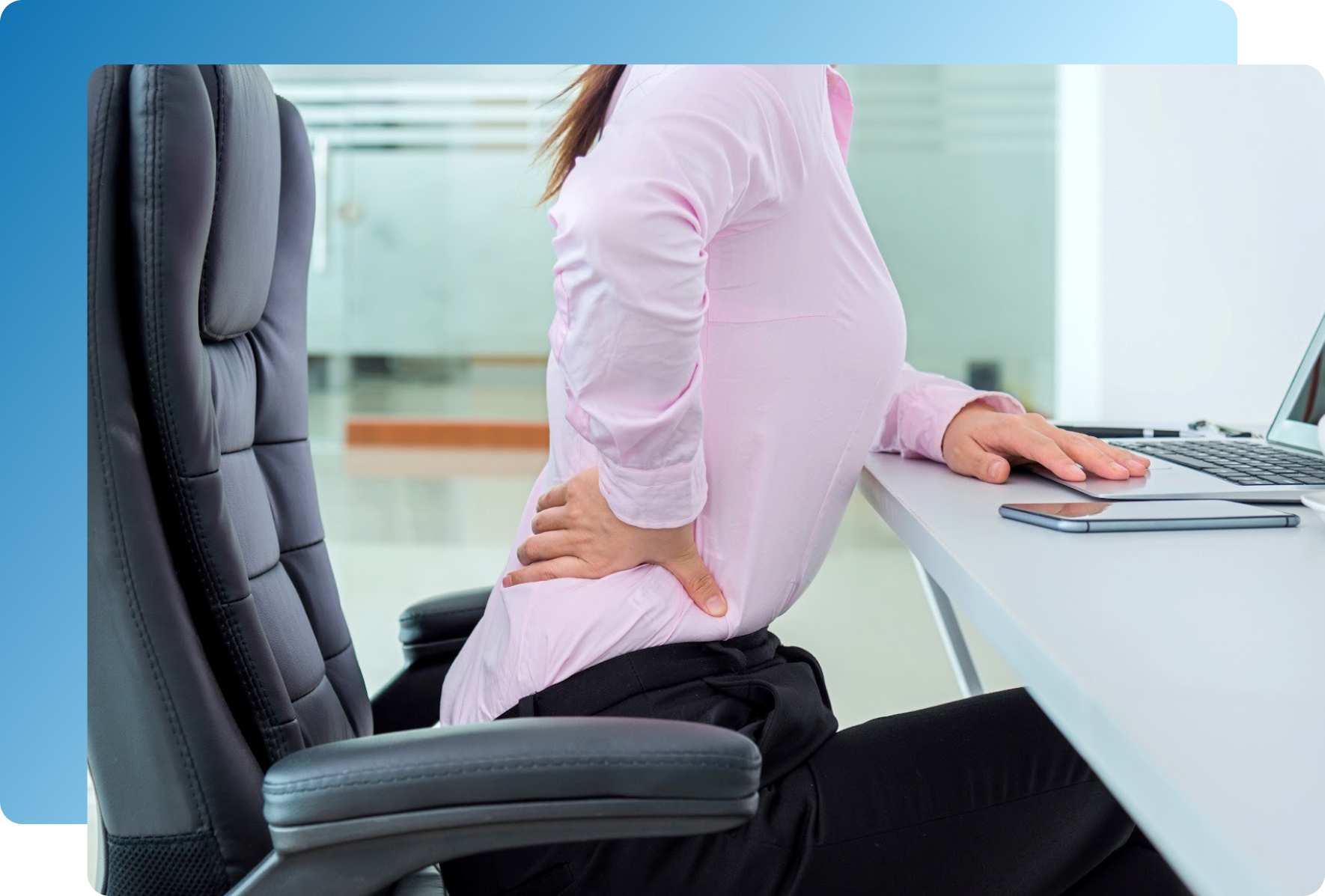
Bulging or Herniated - Disc A disc pressing on a nerve root.
Lumbar Spinal Stenosis - Narrowing of the spinal canal compressing the nerve.
Degenerative Disc Disease - Loss of disc height increasing nerve tension.
Spondylolisthesis - A vertebra slipping forward and pinching the nerve.
Piriformis Syndrome - A tight muscle in the buttock compressing the sciatic nerve.
Inflammation or Facet Arthropathy - Arthritic changes irritating nearby nerves.
What It Feels Like

Sciatic nerve pain can range from annoying to debilitating. Common symptoms include:
Shooting or burning pain down one leg
Numbness or tingling in the calf or foot
Weakness when standing or walking
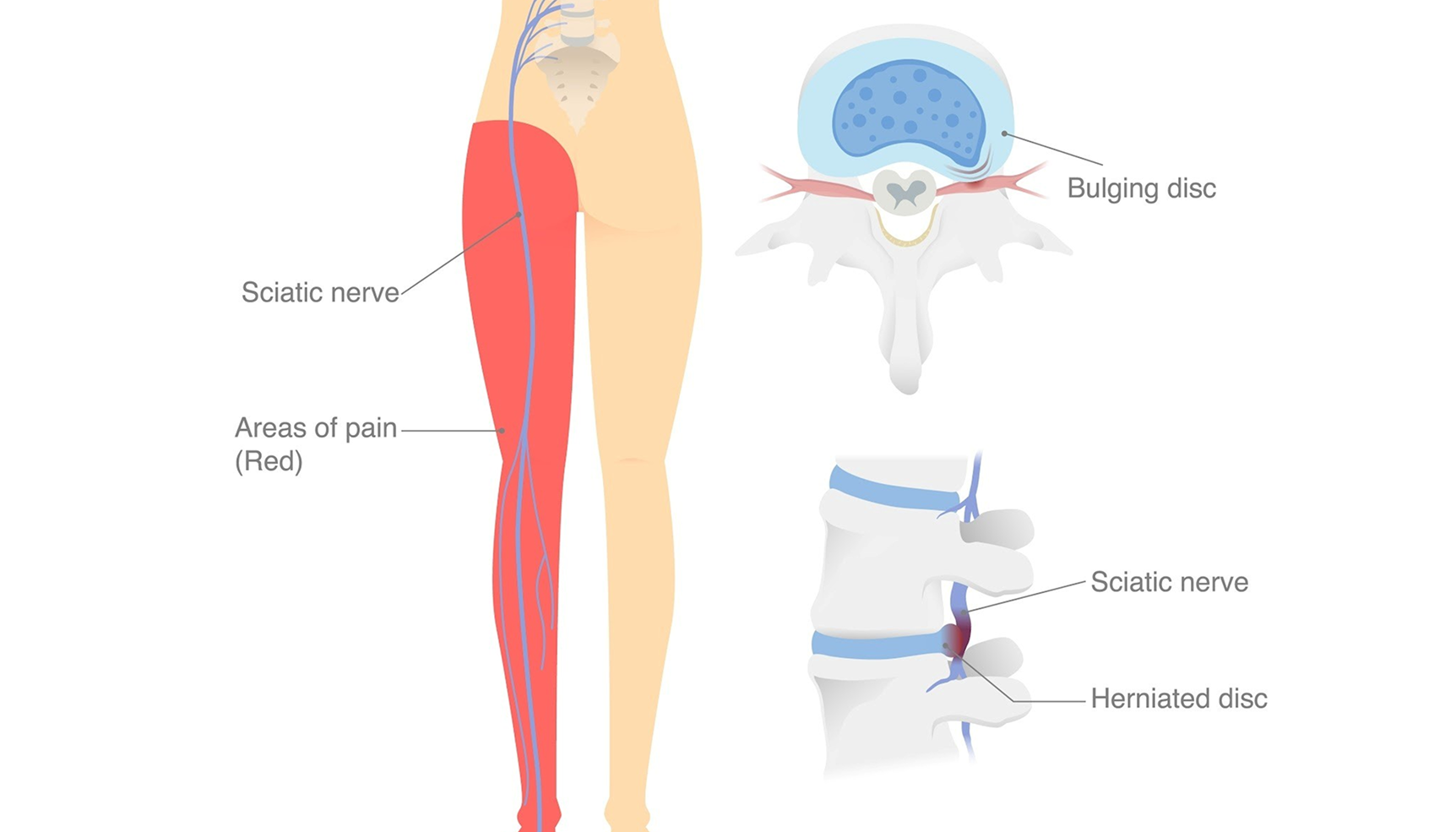
Pain that worsens when sitting or coughing
These patterns help specialists identify the nerve root involved (L4, L5, or S1).
What It Feels Like

Sciatic nerve pain can range from annoying to debilitating. Common symptoms include:
Shooting or burning pain down one leg
Numbness or tingling in the calf or foot
Weakness when standing or walking
Pain that worsens when sitting or coughing
These patterns help specialists identify the nerve root involved (L4, L5, or S1).

When to Seek Medical Help

See a specialist if your pain lasts longer than a few days, or if it’s accompanied by:
Increasing weakness in the leg or foot
Numbness in the groin or saddle area
Loss of bladder or bowel control
Pain after trauma or infection
Prompt evaluation helps prevent permanent nerve damage.
How Sciatica Is Diagnosed
An accurate diagnosis starts with listening to your story, then confirming findings through:
Physical exam to identify pain distribution
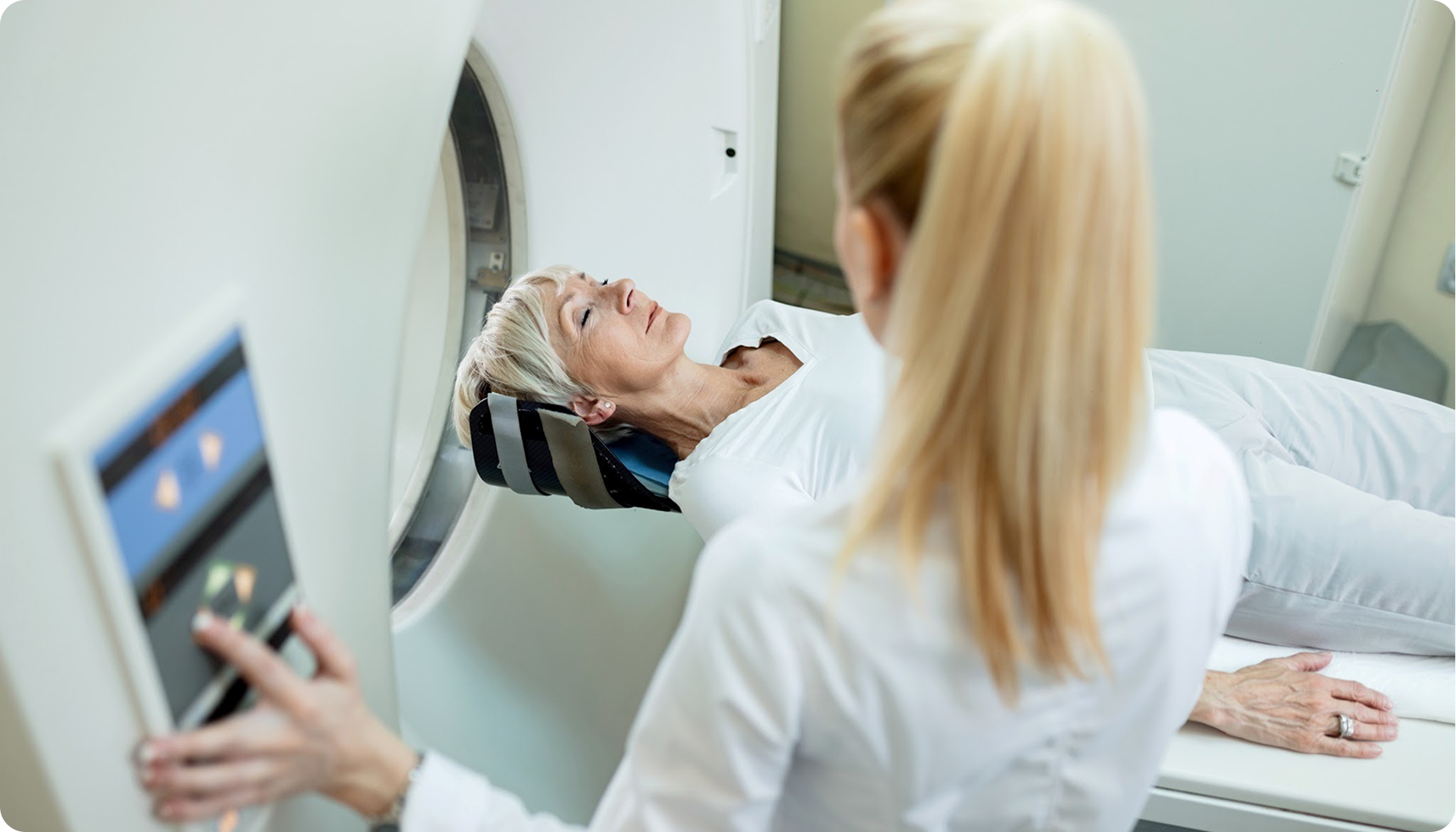
Imaging (MRI or CT) to view discs, nerves, and bone alignment
Diagnostic nerve block to pinpoint the exact pain source
This approach ensures that treatment addresses the root cause not just symptoms.
When to Seek Medical Help
See a specialist if your pain lasts longer than a few days, or if it’s accompanied by:
Increasing weakness in the leg or foot
Numbness in the groin or saddle area
Loss of bladder or bowel control
Pain after trauma or infection
Prompt evaluation helps prevent permanent nerve damage.
How Sciatica Is Diagnosed
An accurate diagnosis starts with listening to your story, then confirming findings through:
Physical exam to identify pain distribution
Imaging (MRI or CT) to view discs, nerves, and bone alignment
Diagnostic nerve block to pinpoint the exact pain source
This approach ensures that treatment addresses the root cause not just symptoms.
Non-Surgical Treatment Options

Modern interventional pain care can often resolve sciatica without surgery.

Epidural Steroid Injection (ESI)
Delivers anti-inflammatory medication directly around the irritated nerve root to reduce swelling and pain.
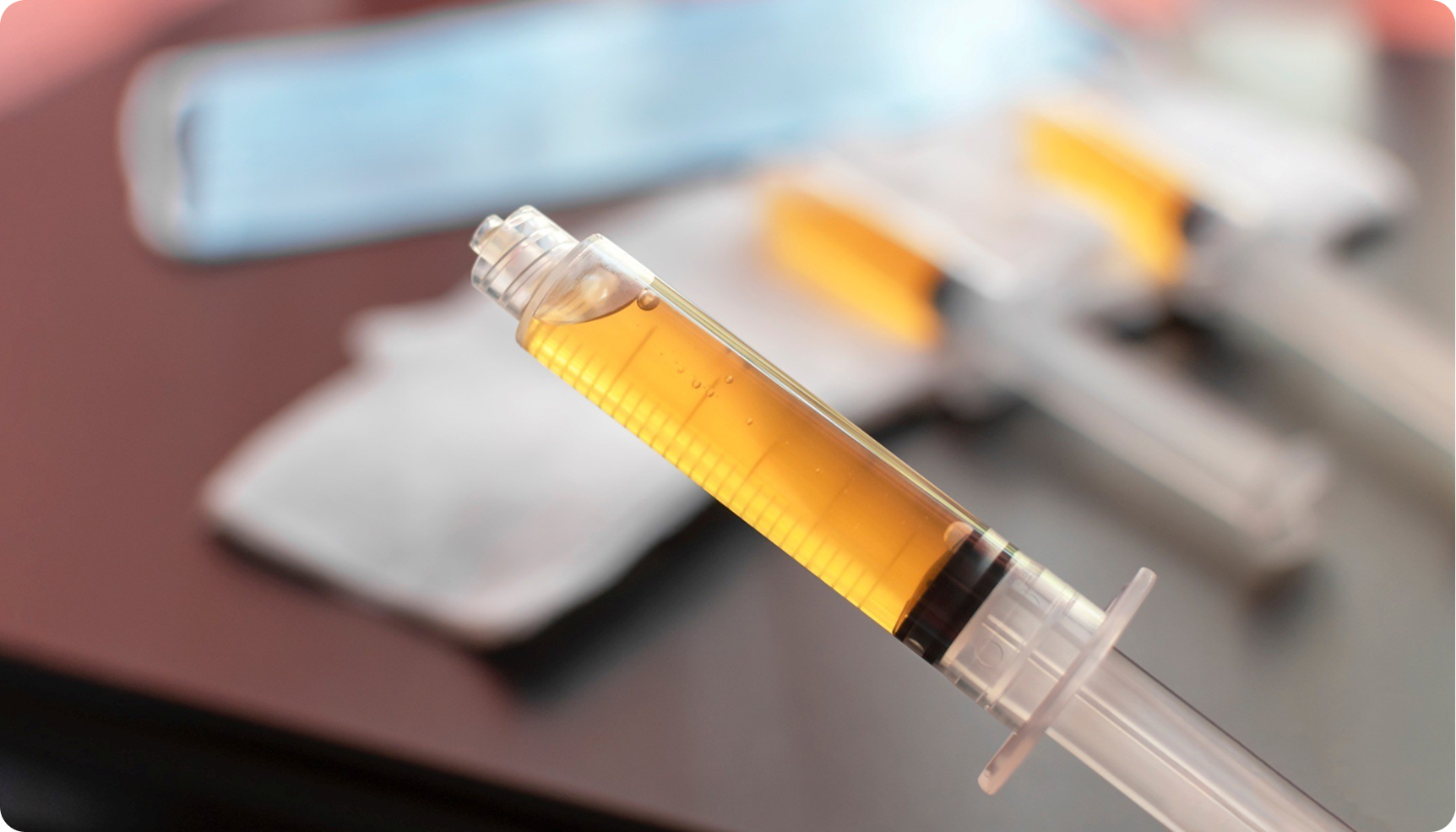
Platelet-Rich Plasma (PRP) or Bone Marrow “Cell” Therapy
For disc or joint degeneration contributing to nerve compression, biologic injections can promote tissue repair.
What About Surgery?

Surgery is reserved for cases where conservative measures fail or there’s severe nerve compression causing progressive weakness or loss of function. Even then, minimally invasive spine specialists often achieve excellent outcomes without open surgery.
Frequently Asked Questions

01. What is a facet ablation (RFA), and how is it different from diagnostic blocks?
Answer: Blocks test the pain source; ablation stops the nerve signal.
A medial branch block temporarily numbs a spinal joint to confirm the pain generator. If it works, radiofrequency ablation (RFA) uses heat to deactivate that small nerve for 6–12 months. The joint stays stable, and pain often lessens dramatically.
02. How long does a radiofrequency ablation (RFA) last, and can it be repeated?
Answer: Relief often lasts 6–12 months and the procedure can be repeated safely.
After an RFA, the tiny sensory nerves that send pain signals grow back slowly. Many patients enjoy meaningful relief for 6 months to a year. If the pain returns, a repeat ablation can usually be performed using the same approach. Regular stretching and strengthening help extend the benefit.
03. Why does my low back hurt after sitting or long drives?
Answer: It’s usually from facet-joint stress or weak postural muscles.
Sitting flexes the lumbar spine and compresses facet joints and discs, especially if the core is de-conditioned. Over time, this posture leads to inflammation and stiffness. Supportive cushions, regular breaks, and targeted therapy for core and glute muscles often relieve symptoms.
04. What is a diagnostic discogram, and why is it rarely done now?
Answer: It injects dye into spinal discs to find the pain source but carries risks.
Discography involves pressurizing discs with contrast dye while monitoring pain response. It was once common before spine surgery but is now less used because it can worsen disc damage and cause infection. Modern MRI and targeted nerve blocks provide safer diagnostic insight.
05. Why do some people have chronic back pain even after “successful” fusion surgery?
Answer: Adjacent levels often wear out faster.
Spinal fusion stabilizes one level but transfers stress to the discs and joints above and below, leading to adjacent segment disease. Scar tissue, muscle atrophy, and nerve irritation can also persist. Nonsurgical options like PRP or radiofrequency treatment can help preserve the surrounding spine.
06. What are “adjacent segment disease” and “hardware failure” after spine surgery?
Answer: They mean nearby levels or implants break down over time.
After fusion, joints next to the fused area compensate by moving more, sometimes developing arthritis or stress fractures. Hardware fatigue or loosening can also occur years later. Regular imaging helps detect changes early; pain-management injections or strengthening programs can often delay revision surgery.
07. How do you tell if leg pain is from the back or from a knee or hip problem?
Answer: Back-related pain travels below the knee; joint pain usually stays local.
Nerve compression in the spine typically causes sharp, shooting pain that radiates past the knee or into the foot. Hip or knee arthritis usually creates aching localized pain or stiffness without tingling. Imaging and physical-exam maneuvers help determine whether the source is spinal, joint, or both.
08. What is an epidural steroid injection and what does it do?
Answer: It delivers anti-inflammatory medicine around pinched nerves.
Guided by X-ray, a thin needle places medication into the epidural space of the spine. The steroid reduces swelling around irritated nerves from a herniated disc or arthritis. Relief may last weeks to months and can allow better participation in physical therapy.
09. What are red-flag symptoms that spine pain is not just mechanical?
Answer: Fever, unexplained weight loss, numbness, or bladder issues.
Warning signs include constant pain at rest, night sweats, progressive weakness, loss of control of urine or stool, or recent infection. These could signal infection, tumor, or severe nerve compression and need emergency evaluation.
10. How long should I wait before considering spine surgery?
Answer: Only after conservative care has clearly failed and red flags are excluded.
Most mechanical back or neck pain improves with guided injections, therapy, or biologic repair within 3–6 months. Surgery is reserved for progressive weakness, structural instability, or nerve compression causing loss of function. A second opinion is always appropriate before proceeding.
11. What is a “facet joint,” and why can it cause back or neck pain?
Answer: It’s a small stabilizing joint behind each vertebra that can become arthritic.
Facet joints allow bending and twisting. With aging or injury, they may develop arthritis and inflammation that causes sharp localized pain, often worse when leaning backward or standing long periods. Facet injections or RFA can calm these joints for months at a time.
12. When should I seek emergency care after a neck or back injury?
Answer: Sudden weakness, numbness, fever, or bladder/bowel changes.
Go to the ER immediately for severe pain with loss of strength, incontinence, high fever, or trauma with head injury. These could indicate nerve or spinal-cord compression, infection, or fracture. Early treatment prevents permanent damage.
13. What is a “nerve root block,” and how is it different from an epidural?
Answer: A nerve-root block targets one specific nerve, while an epidural bathes several.
A selective nerve-root block (SNRB) uses live X-ray to deliver medication directly around one irritated spinal nerve. It helps confirm which nerve causes the pain and can calm inflammation at that precise level. Epidural injections are broader, covering multiple nerves at once.
14. How can I tell if my hip pain is coming from the joint or my back?
Answer: Hip arthritis hurts in the groin; back problems radiate to the leg.
Hip joint disease often causes deep aching in the groin or front thigh, worse with walking or stairs. Lumbar nerve compression tends to cause burning or tingling down the leg. Diagnostic injections into the hip or spine can confirm the true source.
15. Can regenerative medicine help spine patients who already have hardware or fusions?
Answer: Yes, but injections are placed around not into the fused levels.
PRP and bone-marrow concentrate can reduce inflammation in joints and ligaments next to a fusion where new pain develops. These procedures don’t interact with the hardware itself. Most patients benefit from improved flexibility and less reliance on pain medication.
Get Back to Moving Comfortably
If you’re struggling with leg pain or numbness, don’t ignore it. Identifying and treating the cause early can prevent lasting damage and restore your quality of life.
Minimally invasive spine & joint care.
This page is informational only. No medical advice. Book on our secure intake portal.
© 2026 Elite Pain and Health. All Rights Reserved.